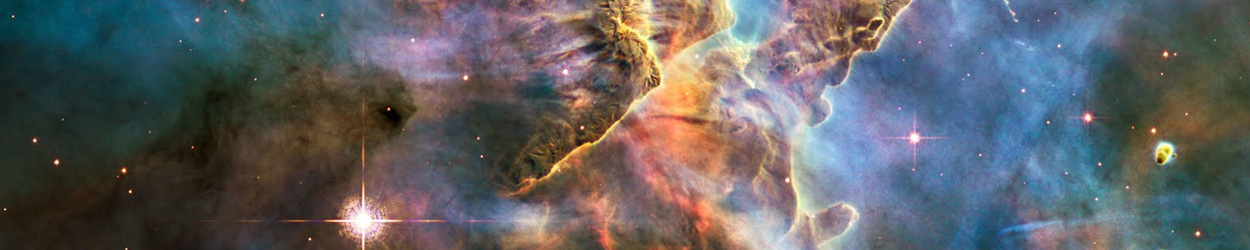

The surface of Agonos II is largely barren rock and regulus, although primitive vegetation and bacteria thrive along the shores of the planet’s waterways. The most significant terrestrial life forms are 8-meter-tall pillars of fungi and algae, often surrounded by low-lying, early vascular plants.
The Agonos System is an uninhabited and largely uninteresting solar system to the galactic east of the Dryillian Quarantine Zone.
According to a Mechanicus survey mission in M31, the Agonos System developed from a metal-poor protoplanetary disk of gas and dust about 4 billion years ago. As a result, the composition of the system’s four planets lack the extensive deposits of valuable metals required for expensive terraforming or human exploitation—and it is not surprising that there is no record of a human settlement at any time in human history.
The only point of interest about this system is the recent conflict between Imperial warships and Tyranid bio-ships. Naval intelligence suggests, however, the xenos are unlikely to be interested in the system as its limited bio-matter is too costly to harvest.
Summary of system worlds:
Agonos I
 The closest planet to its yellow-dwarf star, Agonos I has a rocky composition, but its heavy metal content is limited, and its density is lower than average for a planet with a 5,100-kilometer diameter.
It has an extremely tenuous exosphere consisting of hydrogen, helium, oxygen, sodium, and potassium—which is constantly blasted away by solar wind but replenished by radioactive decay and surface vaporization.
Orbiting at a distance of 71 kilometers from its star, Agonos I is a desolate world scarred by bombardment craters, surface temperatures range from 300º Celsius on the sun-ward side of the planet to -180º Celsius on the night side.
Agonos II
 The only planet hosting life, Agonos II has a biosphere believed to be similar to the early Devon Period of Terra, which was approximately 400 million years ago.
Primitive plant life has developed along the sea coasts and waterways, and the atmosphere is undergoing a significant change—previously dominated by carbon dioxide and water vapor, the atmosphere has seen a slow but growing concentration of oxygen develop following the evolution of photoautotrophs (plants that perform photosynthesis).
The only fauna on the planet exists in its oceans—a variety of primitive aquatic creatures, including worms, mollusks, and other invertebrates
With a diameter of 11,900 kilometers and a small iron core, Agonos II creates a weak magnetic field adequate to protect the planet’s atmosphere from solar winds, and temperatures are well within the tolerances for human habitation. The atmosphere is toxic, however, although survivable with rebreathers.
The planet orbits its star at a distance of 89 million miles.
Agonos III
 With a diameter of 53 million kilometers, Agonos III is a gas giant with an atmosphere consisting mostly of hydrogen and helium. The metal core of the planet is significantly smaller than gas giants forming in a metal-rich protoplanetary disk, explaining why the world has a magnetic field only 70 percent as strong as expected for its size.
Surveys indicate unusually low concentrations of such common elements as ammonia, methane, and oxygen, a shortage that makes cloud development more difficult and gives the planet’s atmosphere a varied blue color with thin cloud rings.
The planet has 31 satellites. Two are small, rocky, and non-spherical asteroids likely captured by the world’s gravitational field. The rest are spherical , icy bodies of no particularly interest.
Agonos IV
 Orbiting nearly 5.1 billion kilometers from its star, Agonos IV is a smaller gas giant with a featureless, pearlish-green atmosphere. It has no satellites.
It is nothing more than a cold body of hydrogen and helium, lacking any measurable concentration of exotic hydrocarbon molecules of commercial value.
Final Analysis: Given the abundance of planets in the region with sizable mineral, biological, and gaseous resources, it is unlikely that the Agonos System will ever be inhabited—and rarely visited—by the Imperium.
—
The Corvus Cluster is Warhammer 40K blog documenting our hobby adventures in the fantastical sci-fi universe of Games Workshop.
Categories: Worlds


